ServicesHardscape Installation
Hardscape Installation in Titusville
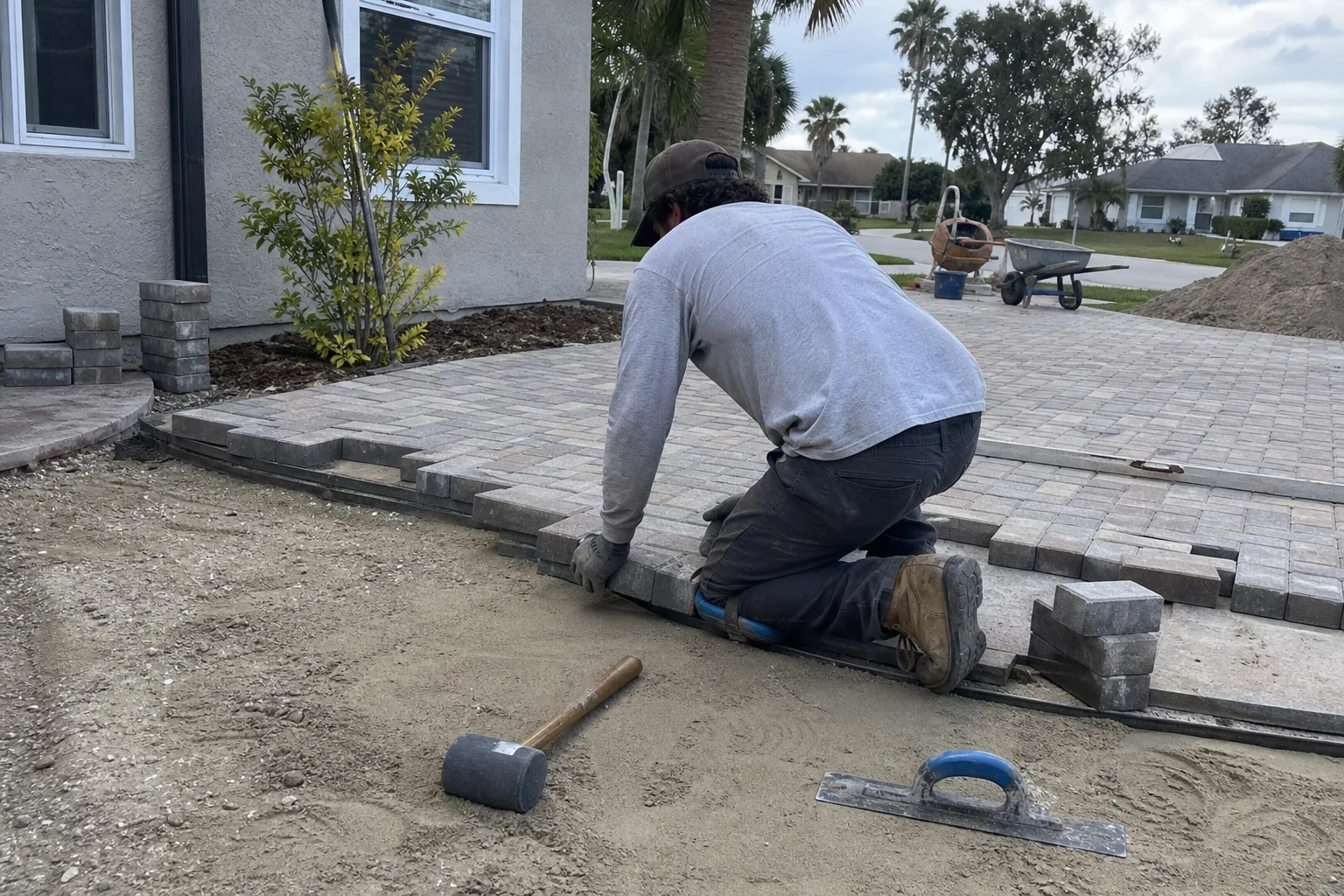
We build paver patios, walkways, driveways, fire pit pads and low retaining walls on a properly compacted base, so the surface stays flat through years of summer rain. Start with a walkthrough at your home and leave with a written plan you can budget for.
What hardscape installation covers
Hardscape is the built part of the yard: concrete pavers, travertine, natural stone, segmental block walls, steppers and gravel paths. The surface you see is the easy part. How long it lasts depends on what sits under it. That means the excavation depth, the compacted base, the bedding sand, the slope, and the edge restraint that keeps the outer row from drifting.
Sandy soil and heavy afternoon storms are hard on a shallow base. Water that pools on a patio finds the joints, washes out bedding sand, and leaves low spots and rocking pavers within a few seasons. We set every surface with a fall of about a quarter inch per foot away from your home, and we plan where that water goes once it leaves the edge.
The best time to plan hardscape is before you need it. If you want a patio for next spring or a wider driveway before a second car arrives, a walkthrough now gives you time to compare materials, phase the work, and set a budget without rushing a decision.
What the work includes
Layout and excavation
We mark the footprint with paint and string, check it against your doors, downspouts and irrigation heads, then dig to the depth the use calls for. A driveway gets a deeper base than a garden path because it carries vehicle loads.
Compacted base
We spread crushed aggregate base in lifts and run a plate compactor over each lift. Compacting in thin layers is what keeps pavers from settling into ruts later.
Bedding, pavers and cuts
A screeded layer of bedding sand goes down, then the pavers in the pattern you picked. Edge pieces are cut with a wet saw so the border stays tight against walls and beds.
Edge restraint and joint sand
Restraint is spiked along open edges to lock the field in place. We sweep polymeric sand into the joints and activate it with water, which helps resist ant mounds, weeds and washout.
Retaining walls
Segmental block walls go on a leveled, compacted footing with the first course partly buried. Clean gravel backfill and a perforated drain pipe behind the wall let water out so it does not push the blocks forward.
Cleanup
We haul off excavated soil and offcuts, blow down the finished surface, and rake disturbed bed edges back into shape.
Signs it is time to plan new hardscape
- Water sits on the patio
- Puddles that linger after a storm mean the surface has lost its slope or was never built with one. Standing water near the slab of your home is worth correcting before it causes other problems.
- Pavers rock or sink
- Loose or sunken pavers usually point to a thin or poorly compacted base. Resetting a few pieces will not hold if the layer underneath keeps moving.
- A worn path in the lawn
- If everyone cuts across the grass to the side gate or the trash cans, the yard is telling you where a walkway belongs. Bare dirt there turns to mud every rainy season.
- A slope that keeps washing out
- Mulch and soil that end up on the sidewalk after each storm show a grade change that needs a low wall or terraced steps to hold it.
- Cracked old concrete
- A heaved or broken slab from an earlier owner can be removed and replaced with pavers, which flex with small movements and can be lifted and reset individually.
How a hardscape project runs
- 1
Walkthrough at your home
We walk the space with you, measure it, look at grade and drainage, and note anything underground such as sprinkler lines. You tell us how you want to use the area, and we talk through materials that fit that use.
- 2
Written estimate and plan
You get a written estimate that lists excavation, base, material, edging and disposal as separate lines. If the job is large, we can split it into phases so you can schedule and budget each part.
- 3
Permits and approvals
If your project needs a city permit or HOA sign-off, we tell you at the walkthrough and handle the permit before work starts. Getting this sorted early keeps the schedule from slipping.
- 4
Build days
Most patios and walkways take a few working days from excavation to joint sand. We protect your lawn where equipment crosses, cap or reroute sprinkler heads in the footprint, and keep the site tidy at the end of each day.
- 5
Final walk
We walk the finished surface with you, run water across it to show the drainage, and explain how long to wait before driving or setting heavy furniture on it.
What moves the price of hardscape
Hardscape is priced by what goes into the ground as much as what goes on top. Two patios of the same size can differ a lot once you account for digging, base depth and material. Your written estimate breaks each of these out on its own line. For bigger projects, you can pay over time: we offer financing of up to $100,000, with terms anywhere from two to twelve years and no penalty if you pay it off early.
- Size and use
- Square footage sets the material count, and the expected load sets the base depth. A driveway costs more per foot than a patio because it needs more excavation and aggregate.
- Material choice
- Standard concrete pavers, larger format pavers, travertine and natural stone vary widely in material cost and in how much cutting and handling they need.
- Removal and access
- Tearing out an old slab or overgrown area adds labor and disposal. Tight side yards where equipment cannot reach mean more work by hand.
- Walls, steps and drainage
- Retaining walls, step risers, drain pipe and gravel backfill add materials and time. Correcting a grade problem now costs less than rebuilding a patio that floods later.
- Pattern and borders
- Herringbone layouts, curves and contrasting borders need more cuts and more time than a straight running bond.
Hardscape installation questions
- Are pavers better than poured concrete for a patio?
- For most yards here, yes. Pavers have joints that let small movements happen without cracking, and a damaged piece can be lifted and replaced. Poured concrete can work well, but a crack in a slab is permanent.
- Why do ants push sand up between my pavers?
- Ants nest in loose bedding and joint sand, especially when the joints were filled with plain sand. Polymeric sand binds once it is activated with water, which makes it much harder for ants to dig through and for rain to wash out.
- Will the work damage my sprinklers?
- We locate irrigation lines and heads during the walkthrough. Heads inside the footprint get capped or moved, and lines that cross under the new surface are noted so nothing gets cut by surprise. If your system needs bigger changes, our irrigation service can handle it.
- Can I spread the project out over time?
- Yes, and it often makes sense. Many people start with the patio and add a walkway, fire pit pad or seat wall later. We plan the first phase so later pieces tie in at the right height and slope.
- Who will be working at my home?
- We are a family-owned company, business licensed, and in business since 2018. The people who walk your project with you are the same company that builds it.
Plan your patio or walkway before the season you want it
A walkthrough gives you measurements, material options and a written estimate, with time to budget before you commit. The estimate is free.