ServicesSod Installation
Sod Installation in Titusville
We replace thin, weedy or dead lawns with fresh sod laid on a properly prepared base. We pick the grass for your shade and soil, schedule the install when it roots best, and give you a written estimate so you can budget before the yard gets worse.
When new sod is the right call
Sod makes sense when the existing lawn is past saving: more weeds than grass, bare patches that keep spreading, or turf that chinch bugs or nematodes have thinned out year after year. Overseeding does not work well with St. Augustine, the most common lawn grass here, because it is sold as sod and plugs rather than seed. If more than about half the lawn is gone, replacing it is usually cheaper over time than repeated patching.
The grass itself is only part of the job. Most failed sod jobs fail underneath: old turf left in place, low spots that hold water, or sprinkler heads that miss the edges. We fix those first, which is why we prefer to plan a sod job a season ahead instead of rushing it after a lawn has already died out.
We are a family-owned, business licensed company that has been laying sod for homeowners around Titusville since 2018.
What a sod installation includes
Grass selection for your yard
Floratam St. Augustine handles full sun but struggles in shade, where varieties like Seville or CitraBlue do better. Bahia tolerates drought and sandy soil with little fertilizer but looks coarser. Zoysia gives a dense, finer lawn and needs more careful mowing. We match the grass to your sun hours, irrigation and how much upkeep you want.
Old turf and weed removal
We strip the existing lawn with a sod cutter or treat it ahead of time so roots and weeds do not push up through the new grass. Debris, rocks and old roots are hauled away.
Grading and base prep
We fill low spots with clean sand or topsoil, slope the grade away from your home's foundation, and set the finished level so sod sits flush with driveways, walkways and bed edges.
Irrigation check
Before the sod goes down we run each sprinkler zone, raise or adjust heads and flag coverage gaps. If the system needs real repairs, our irrigation service can handle them in the same project.
Laying and rolling
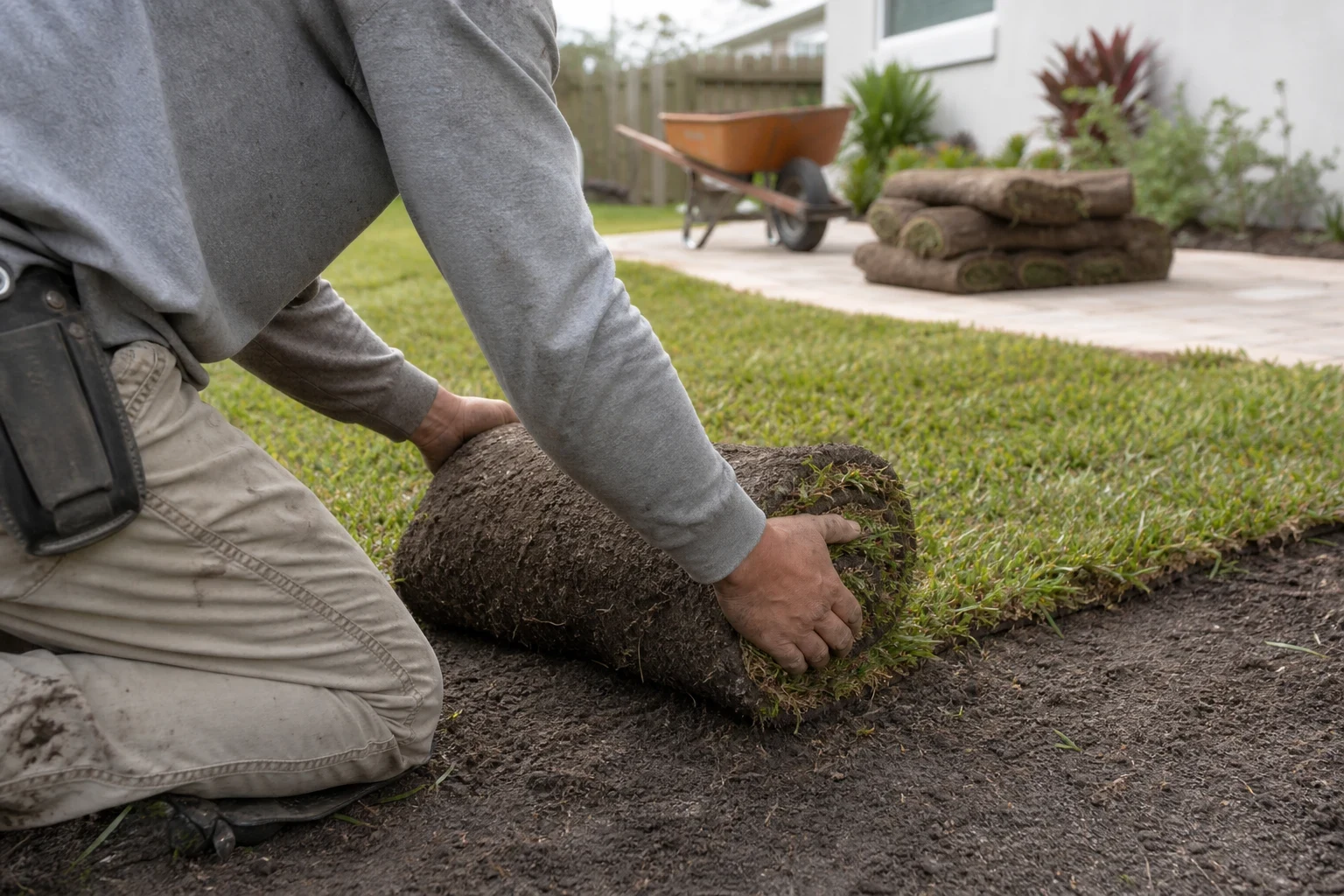
Pieces are laid tight with staggered seams, cut cleanly around beds and trees, then rolled so the roots make full contact with the soil underneath.
Signs your lawn needs new sod
Bare spots that keep growing
Patches that widen every summer usually point to chinch bugs, fungus or nematodes that have killed the root system. Once the runners are gone, St. Augustine rarely fills back in on its own.
Weeds outnumber grass
When dollarweed, crabgrass or sedge cover most of the lawn, herbicides tend to stress what little turf is left. Starting over is often the cleaner fix.
Water pooling after rain
Puddles that sit for a day after a summer storm mean the grade is off. New sod on a corrected grade drains properly and avoids root rot.
Grass dying out under new shade
Trees that have filled in over the years can shade out sun-loving grass. A shade-tolerant variety, or a bed in the darkest spots, solves it.
Prepping to sell or after construction
Work on a pool, addition or septic line often leaves torn-up, compacted ground. New sod restores the yard once the heavy equipment is gone.
How the job runs
- 1
Walkthrough and written estimate
We walk the yard with you, measure the area, check sun and drainage, and test the sprinklers. Then we go over a free estimate with you by phone that lists prep, grass type and square footage line by line.
- 2
Scheduling for the right season
Sod roots fastest from spring into early summer, when warm soil and summer rains do part of the work. We book ahead so the install lands in that window instead of during a dry spell or winter slowdown.
- 3
Prep day
The crew removes old turf, hauls debris, grades the base and adjusts irrigation. On most average-sized lawns, prep and laying happen over one or two days.
- 4
Install and first watering
Fresh pallets arrive the morning of install so the grass is not sitting and heating up. We lay, roll and soak each section, then clean the hardscape and haul away scraps.
- 5
Your establishment plan
We leave a written watering schedule for the first few weeks and tell you when to start mowing. Local watering rules generally allow extra watering for newly installed sod, and we explain what applies to your address.
What affects the cost of new sod
Price is driven mostly by square footage and how much prep the ground needs. Two yards of the same size can differ a lot if one needs heavy grading and the other is flat and clear. We price every part separately so you can see where the money goes and plan the work in phases if that fits your budget better. If you are redoing a large area along with other yard work, we can spread the cost through financing of up to $100,000, with terms from 2 to 12 years and no penalty if you pay it off early.
- Lawn area
- Sod is sold by the pallet, so total square footage sets the material cost and much of the labor.
- Grass variety
- Bahia is typically the least expensive. Shade-tolerant St. Augustine and Zoysia cost more per pallet.
- Removal and grading
- Thick old turf, roots, stumps or significant fill sand add hours and disposal. A flat, cleared yard costs less to prep.
- Access
- Narrow side yards, fenced backyards and gates too small for equipment mean more hand work moving pallets and soil.
- Irrigation repairs
- Moving heads or fixing broken zones before install adds to the job, but it protects the investment in new grass.
Sod installation questions
Something not covered here? (407) 544-5119
Which grass is best for my yard?
It depends mostly on sun and irrigation. Full sun with a working sprinkler system suits Floratam St. Augustine or Zoysia. Partial shade calls for a shade-tolerant St. Augustine, and a large or unirrigated area often does best with Bahia. We recommend a grass after seeing your yard in person.
How long before I can walk on or mow new sod?
Keep foot traffic light for about two weeks while roots knit into the soil. A gentle tug that does not lift the sod means it has rooted. The first mow usually comes two to three weeks after install, with the blade set high.
Can you lay sod over my existing grass?
We do not. Old turf breaks down into a layer that blocks new roots from reaching the soil, and weeds come right back through it. Removing it is the step that keeps a new lawn alive.
What time of year should I plan for?
Spring through early summer is ideal because the warm-season grasses we use root quickly in warm soil. Sod can go down in cooler months, but it roots slower and needs closer watching. Calling a few months ahead lets us book the best window.
Will you maintain the lawn afterward?
Yes, if you want. Our lawn care service covers mowing, fertilizing and pest monitoring once the sod has rooted, which helps catch chinch bug or fungus problems early.
Plan your new lawn before summer
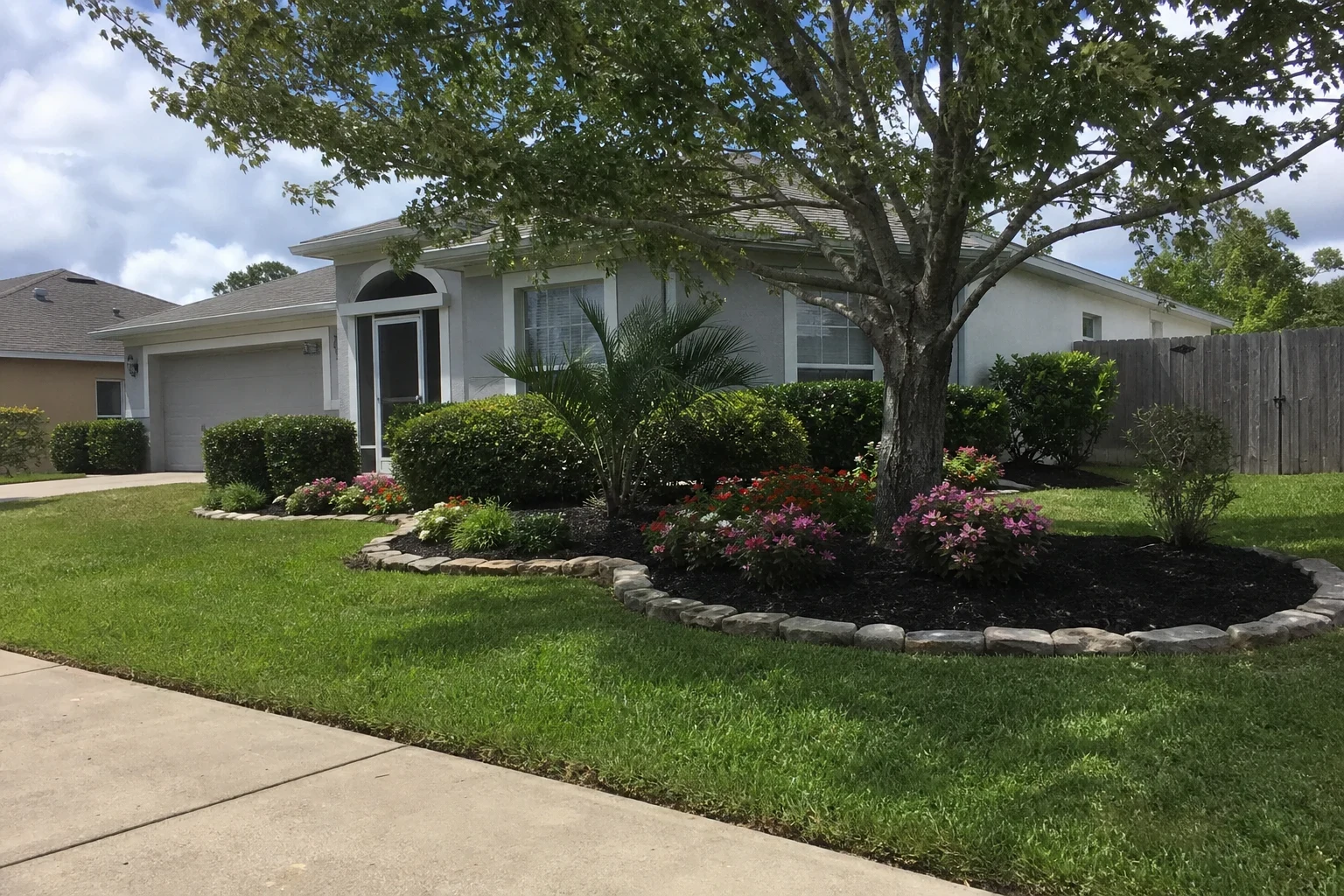
We will measure your yard, check drainage and sprinklers, and give you a line-item number so you can budget and book the right season. Our free estimate comes with no pressure to schedule.