ServicesIrrigation
Irrigation Repair and Upgrades in Titusville
We test every zone, find what is wasting water or starving your lawn, and fix it with the right heads, valves and controller settings. You get a written plan that shows what needs attention now and what can wait for next season.
A sprinkler system that waters what it should
Most irrigation problems start small. A rotor tilts after a mower clips it, a spray nozzle clogs with sand, or a valve diaphragm wears and lets a zone weep all night. In sandy Brevard soil, water drains fast, so a single zone running short or overlapping badly shows up as brown patches or soggy turf within a couple of weeks.
We work on existing systems and on additions to them: repairing broken lines, replacing heads and solenoid valves, converting shrub zones to drip, and programming controllers. Because we look at the whole system on one visit, you can budget repairs in order of what actually costs you water or plants, instead of fixing whatever breaks next.
What our irrigation work covers
Zone-by-zone testing
We run each zone manually and watch it. That shows us tilted or sunken heads, blocked nozzles, mismatched spray patterns and pressure drops from a cracked lateral line.
Head and nozzle replacement
We match rotors with rotors and spray heads with spray heads in the same zone. Mixing them puts down water at very different rates, which is a common cause of one wet corner and one dry strip.
Valve and wiring repair
A zone that will not turn on, or will not shut off, usually points to a failed solenoid, a torn diaphragm or a broken wire splice. We trace it at the valve box and repair the part that failed.
Drip conversion for beds
Spray heads in planting beds soak mulch, wet foliage and miss the root zone. Drip tubing with emitters puts water at the base of shrubs and pairs well with our mulch and beds work.
Controller and rain sensor setup
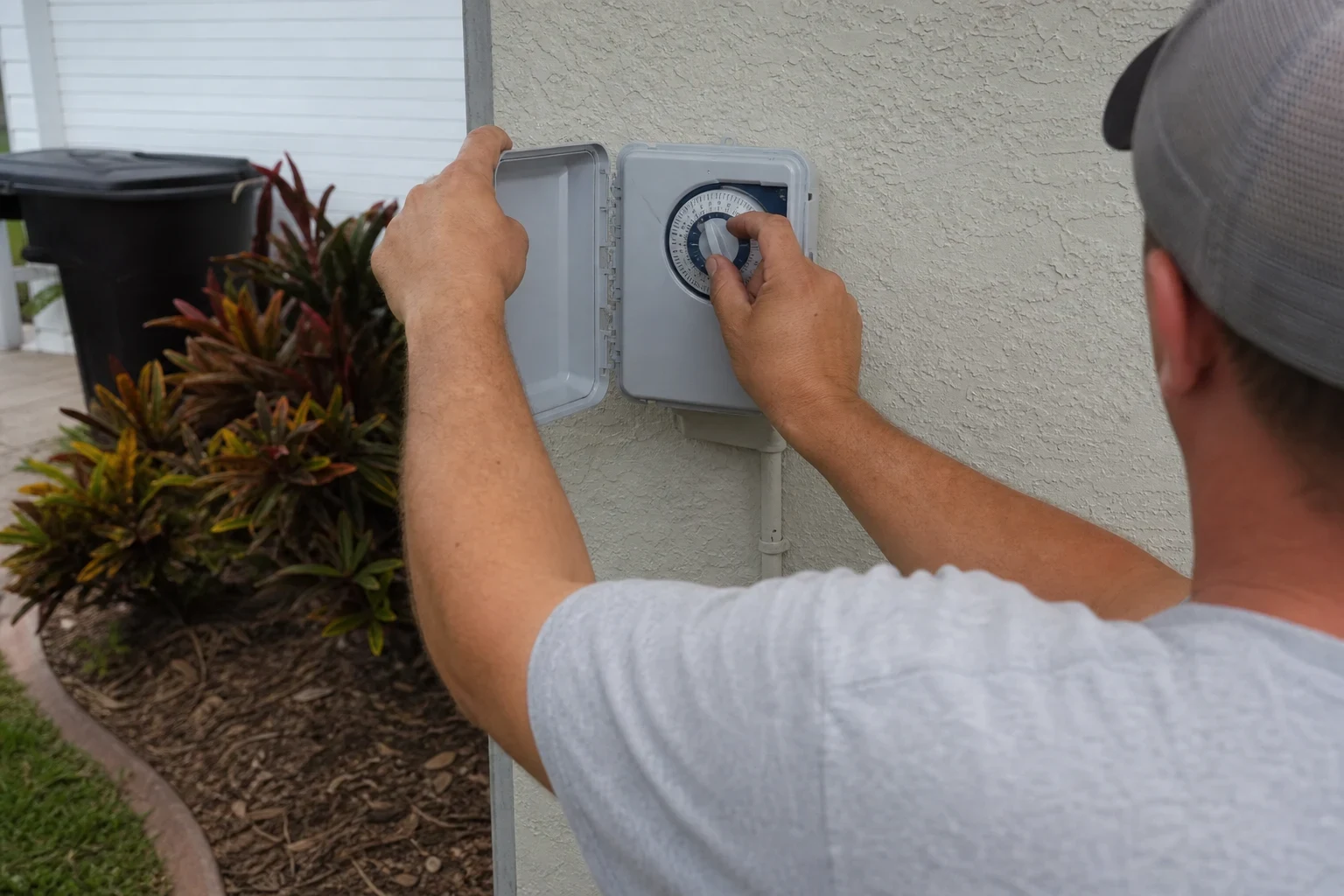
We set run times by zone type and season, and check that the rain sensor actually interrupts the cycle, which Florida law requires on automatic systems.
Signs your system needs a closer look
Dry rings and soggy spots
Brown arcs between heads mean coverage gaps. Puddling or spongy turf near one head often means a leaking fitting or a low-head drain-down after each cycle.
A zone that keeps running
If water trickles from heads long after the controller stops, the valve is not sealing. It wastes water every hour it runs and can rot turf roots.
Orange stains on walls and walks
Rust-colored streaks usually come from iron in well water. Re-aiming heads away from surfaces helps, and we can tell you whether a treatment setup is worth pricing.
A water bill that jumped
A broken lateral line under the turf can leak for weeks before it shows. An unexplained increase in usage is worth a full system test.
Heads that spray the street
Misaligned or wrong-radius nozzles throw water onto pavement. That is wasted water, and it is easy to correct.
How a visit runs
- 1
Walkthrough and test
We meet you at your home, locate the controller, backflow device and valve boxes, then run each zone while we mark problems. You are welcome to walk it with us.
- 2
Written estimate in priority order
You get a line-item estimate with leaks and failed valves at the top and upgrades like drip conversion or a smart controller listed separately. That way you can schedule the optional work when it fits your budget.
- 3
Repair day
We dig carefully around heads and lines, cut out damaged pipe and glue in new fittings, then flush the line before reinstalling nozzles so sand does not clog them on the first run.
- 4
Final run and schedule
We run every zone again with you, set the controller to the current watering days, and show you how to change the schedule when the season shifts.
What moves the cost of irrigation work
Irrigation pricing depends far more on what we find underground than on the size of the yard. We price after testing the system, not before, so the estimate reflects real parts and labor. A free estimate comes with every walkthrough.
- Number of zones affected
- Fixing one valve is a short job. Rebalancing heads across six zones takes much longer, even with the same parts.
- Where the break is
- A line under open turf is quick to reach. A line under a driveway edge, pavers or a tree root mass takes more digging and sometimes a reroute.
- Water source
- Systems on a well pump add the pump, pressure switch and relay to the list of things that can fail. City-supplied systems add the backflow preventer.
- Repair versus upgrade
- Replacing like for like costs less than converting zones to drip or adding a weather-based controller. If a bigger rebuild makes sense, you can spread it out: we offer financing for amounts as high as $100,000, with repayment periods anywhere from two to twelve years and no penalty for paying it off early.
Irrigation questions we hear often
Something not covered here? (407) 544-5119
How often should my sprinklers run?
Fewer, deeper cycles beat short daily ones, because deep watering pushes St. Augustine roots down into the sand. The St. Johns River Water Management District sets watering days by address and season, and limits daytime watering. We set your controller to those days and adjust run times by zone.
Do I need a new system or can you fix the one I have?
Most systems we test can be repaired. Pipe in good shape lasts many years; heads, valves and controllers wear out sooner. If repairs would cost close to a rebuild, we tell you that plainly and show you why.
When is the best time to schedule irrigation work?
Late winter and early spring, before the dry stretch that usually runs through April and May. Fixing coverage then means your lawn goes into the hottest weeks with even water instead of dry patches.
Is drip worth it in my beds?
Usually, yes. Drip uses less water, keeps foliage dry so fungal problems slow down, and stops spray from washing mulch away. It works best with a fresh layer of mulch over the tubing.
Who does the work?
We are a family-owned, business licensed company, in business since 2018. The same crew that tests your system handles the repair, so nothing gets lost between the estimate and the work.
Get ahead of the dry season
A walkthrough now shows what your system needs before the lawn starts showing it. We test every zone and leave you a written estimate you can plan around.