ServicesMulch and Beds
Mulch and Bed Work in Titusville
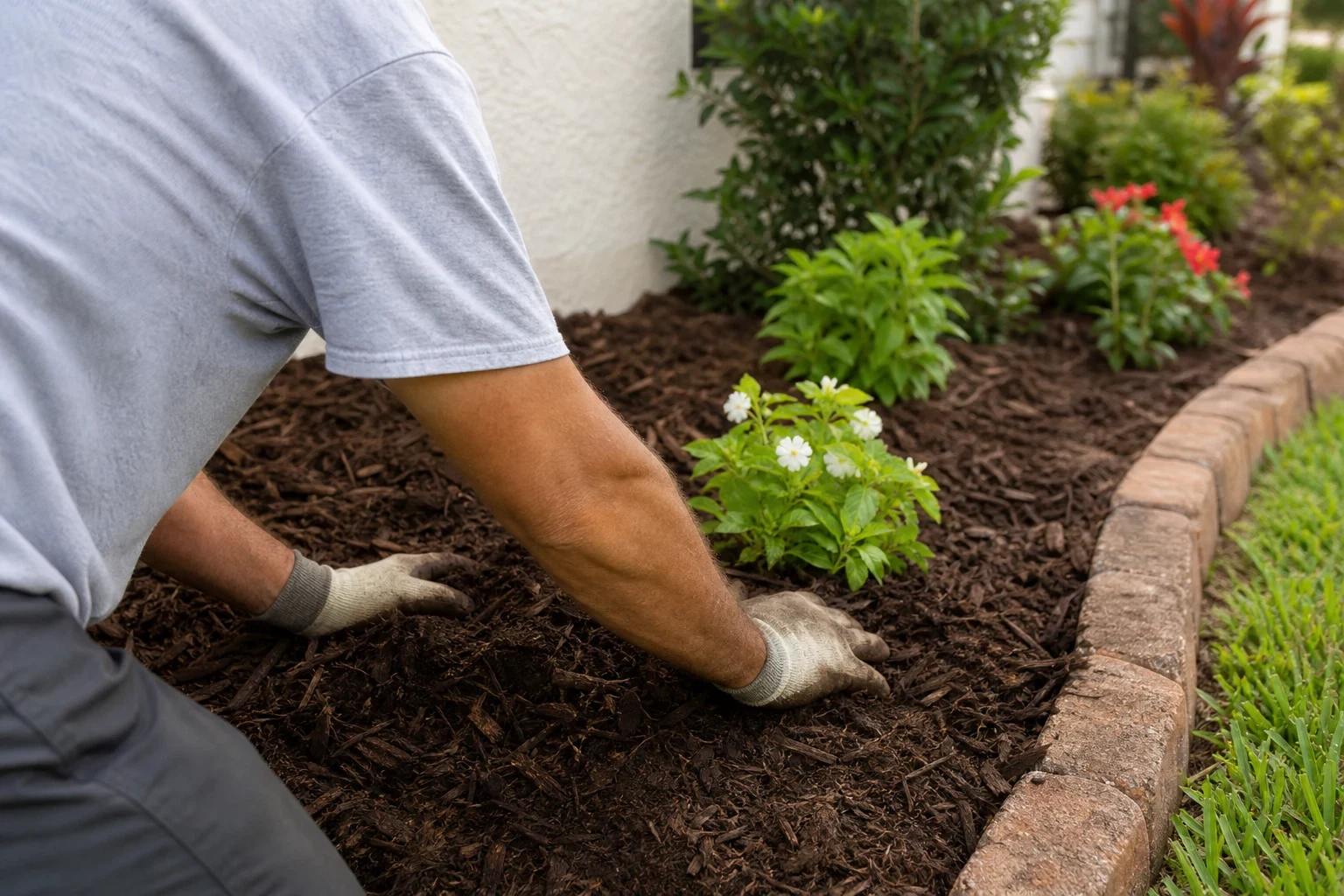
We clear out weeds and spent mulch, cut clean edges, and lay the right material at the right depth so your beds hold up through the rainy months. You also get a refresh schedule, so the next round is something you budget for instead of a weekend you lose to weeds.
What good bed work actually does
Mulch has three jobs: it shades the soil so weed seeds don't germinate, it slows evaporation so roots stay evenly moist, and it breaks down into organic matter that sandy soil badly needs. In heat and humidity, organic mulch decomposes fast. A bed that looked full in spring can show bare sand by fall, and that is when weeds move in.
Most bed problems we see come from how the mulch went down, not the mulch itself. Piled too deep, it mats and sheds water. Spread too thin, it does nothing. Heaped against trunks and the foundation, it holds moisture where you don't want it. We measure depth, keep clearances, and tell you roughly when the bed will need attention again.
We are a family-owned, licensed business and have been doing this work since 2018, so our recommendations come from watching the same materials age through several seasons.
What a bed refresh includes
Weed and root removal
We pull weeds by the root, including dollarweed, nutsedge and grass runners that have crept in from the lawn. Spraying alone leaves the root systems in place, so we dig what needs digging.
Old mulch and fabric assessment
If old mulch has turned into a dense mat, we break it up or remove it. Landscape fabric that weeds are now rooting into on top usually comes out, because it has stopped doing its job.
Cut edges
We cut a clean spade edge between turf and bed, or install plastic or steel edging where grass keeps invading. A defined edge keeps mulch in and runners out.
Grade and soil check
We level low spots and pull soil away from the slab so water drains outward. Where the sand is bare and hungry, we can work in compost before mulching.
Mulch at a measured depth
Pine bark, pine straw or hardwood goes down at two to three inches, pulled back a few inches from trunks, stems and siding. Drip lines stay on top of the soil and under the mulch, where they belong.
Signs your beds are due
Bare sand showing through
Once you can see soil, weed seeds have light and the mulch has stopped insulating roots. That usually means the layer has decomposed below an inch.
Mulch washed onto the walkway
Pine bark nuggets float. If heavy rain carries them onto the driveway, the bed likely needs an edge, a grade fix or a heavier material.
Weeds growing on top of fabric
Decomposed mulch on top of fabric becomes a seedbed. The weeds root into it and the fabric underneath makes them hard to pull cleanly.
Mulch volcanoes around trees
Mulch mounded against a trunk keeps bark wet, invites rot and insects, and can girdle the roots over time.
Lawn creeping into the beds
When the edge has faded, St. Augustine runners travel across the bed in a single season and start rooting between your shrubs.
How the job runs
- 1
On-site walkthrough
We walk each bed with you, measure the square footage, and check depth, drainage, edges and what is under the current mulch. We point out anything that affects the plants, like a drip emitter that is clogged.
- 2
Written estimate and timing
You get an estimate by bed, with the material and depth spelled out. If budget is tight, we suggest which beds to do now and which can wait until the next season.
- 3
Work day
We weed, edge and grade first, then spread mulch by hand around plants so nothing gets buried. Most residential beds are finished in a day.
- 4
Cleanup and next date
We blow off walks and the driveway and haul away debris and old fabric. Before we leave, we tell you when the beds will likely need a top-up, so you can plan for it.
What moves the price
Bed work is priced on the area, the material and how much prep the bed needs before any mulch goes down. A bed that only needs a top-up costs far less than one that needs weeds dug, fabric pulled and edges rebuilt. When bed work is part of a bigger landscape design project, you can spread the cost out: we finance amounts as large as $100,000, with terms anywhere from two to twelve years, and paying the balance off early carries no penalty.
- Area and depth
- Square footage times depth sets the volume of material. A bare bed needs a full layer; a recent one may only need an inch on top.
- Material choice
- Pine straw, pine bark and hardwood differ in cost and in how fast they break down. Pine straw usually needs refreshing more often, which matters for your long-term budget.
- Prep work
- Heavy weeds, matted old mulch, buried fabric and soil against the slab all add labor before mulching starts.
- Edging and access
- Installed edging costs more than a cut edge. Beds behind fences or gates, far from where material can be dropped, take longer to fill.
Mulch and bed questions
Something not covered here? (407) 544-5119
How deep should mulch be?
Two to three inches for most beds. Deeper than that, mulch can mat and shed water, and roots start growing up into it. We keep it pulled back from trunks and the foundation.
Which mulch works best here?
Pine bark and pine straw are common choices and both add organic matter to sandy soil. Pine straw stays put on slopes but breaks down faster. Pine bark nuggets look neat but can float in heavy rain, so we prefer finer bark or straw where water runs through a bed.
Should I use landscape fabric?
Usually not under organic mulch. Within a year or two, decomposed mulch sits on top and weeds root right into it. We rely on depth, good edges and pulling weeds by the root instead.
Does mulch near the house attract termites?
Mulch holds moisture, which termites like, so we keep a mulch-free strip along the foundation and away from siding. That gap also lets you see the slab edge and keeps water draining away from your home.
How often will I need a refresh?
Most beds here need a top-up once or twice a year, depending on the material and how much sun and rain they get. We give you an estimated date after each job so you can plan it alongside seasonal cleanup or lawn care.
Get ahead of the next round of weeds
We will walk your beds, measure them, and tell you what needs doing now and what can wait. The walkthrough and estimate are free.